Are you managing your narcolepsy symptoms of cataplexy and/or excessive daytime sleepiness?

Symptoms of narcolepsy
The impact of narcolepsy
It's important to talk to your doctor about your symptoms of cataplexy or EDS, even if you are already on treatment. Continuing to assess your symptoms can help your doctor adjust your management plan as needed.
See where your daytime sleepiness falls on the Epworth Sleepiness Scale (ESS) and share your results with your doctor
See how excessive daytime sleepiness and cataplexy impacted Grace
Watch to see how Grace manages 2 key daytime symptoms of narcolepsy.
“I have narcolepsy type 1, and I take XYWAV to help treat my excessive daytime sleepiness and cataplexy.”
—Grace, XYWAV Standup Champion
Real patient compensated for their time. Individual results may vary.
See how excessive daytime sleepiness and cataplexy impacted Grace
Watch to see how Grace manages 2 key daytime symptoms of narcolepsy.

People with narcolepsy may be at risk for cardiovascular conditions
Cardiovascular conditions have been found to occur more often in people with narcolepsy.
One study found that compared to people without narcolepsy, people with narcolepsy had:
the risk* of
HIGH BLOOD
PRESSURE†
the risk* of
HEART
ATTACK‡
the risk§ of
STROKE‖
*Odds ratio.
†Based on an interview study of 320 people with narcolepsy compared to 1464 people without narcolepsy matched for age, sex, and body mass index.
‡Based on an analysis of 9312 people with narcolepsy and 46,559 people without narcolepsy matched by age, sex, geographic region, and payer who had continuous insurance coverage between the years of 2006 and 2010.
§Hazard ratio.
‖Based on an analysis of 34,562 people with narcolepsy and 100,405 people without narcolepsy matched by presence of relevant health conditions, including sleep apnea and diabetes.
Managing sodium intake matters
Consuming too much sodium is a risk factor for cardiovascular disease. A study determined that each 1000-mg increase in daily sodium levels was associated with an 18% increased risk of cardiovascular disease.
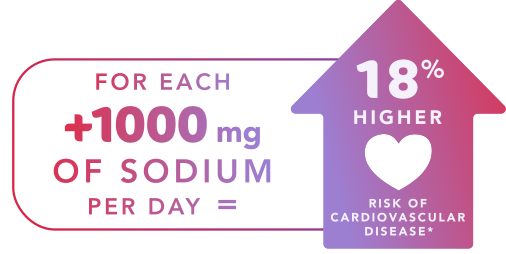
*Study Design: Researchers combined data from 6 studies involving a total of 10,709 people to see how sodium intake affects cardiovascular risk. Participants provided multiple 24-hour urine samples, the most accurate way to measure sodium intake. The main outcome was whether participants experienced any major heart or blood vessel events, such as heart procedures, heart attacks, or strokes, within approximately 8 to 11 years since the studies began.
Other factors may also increase the risk of cardiovascular conditions
You may be able to address your risk factors for cardiovascular disease through lifestyle changes, including:

Smoking

Physical activity

Diet
