Study results for XYWAV in adults with narcolepsy

The phase 3 clinical study
- The efficacy and safety of XYWAV were studied in 201 adults aged 18-70 years with narcolepsy who had at least 14 cataplexy attacks in a typical 2-week period before they took any treatment*
- All people in the clinical study started treatment on XYWAV. Some participants continued taking their stimulant or wake-promoting agent along with XYWAV
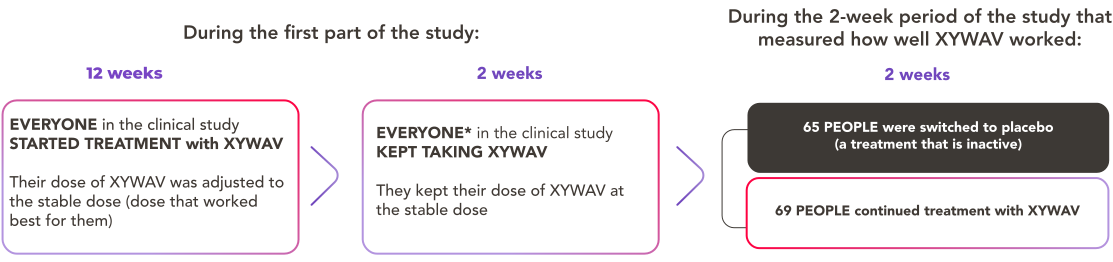
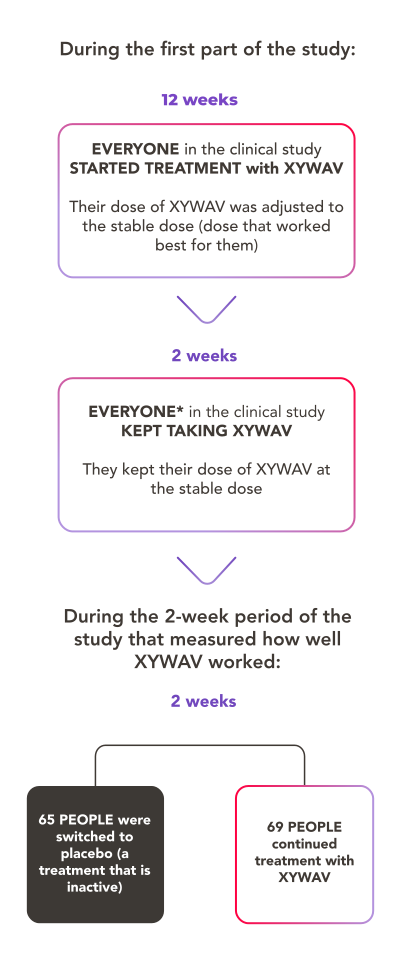
*Not everyone completed each part of the study. Of the 201 patients, 134 were included in the 2-week period that measured how well XYWAV worked.
Results from the XYWAV clinical trial
During the 2-week period of the study that measured how well XYWAV worked:
Patients on XYWAV showed less of an increase in cataplexy attacks
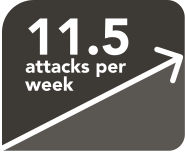
In people who stopped taking XYWAV,
cataplexy increased by an average of:
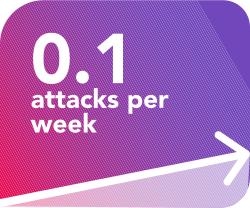
In people who continued taking XYWAV,
cataplexy increased by an average of:
Patients on XYWAV showed less of an increase in excessive daytime sleepiness (EDS)
In people who stopped taking XYWAV,
daytime sleepiness increased by an average of:
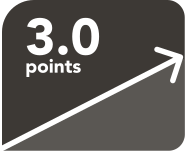
In people who continued taking XYWAV,
daytime sleepiness increased by an average of:
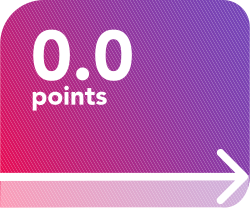
The Epworth Sleepiness Scale (ESS) is intended to measure EDS, a symptom of narcolepsy. It is not intended to make a narcolepsy diagnosis.
See where your daytime sleepiness falls on the Epworth Sleepiness Scale (ESS) and share your results with your doctor
After the phase 3 study was completed, a separate analysis of the data examined cataplexy-free days* during the study
This information is from a separate study, also called a post-hoc analysis, that took place after the original study that looked at patients’ daily cataplexy frequency diaries to learn how often cataplexy occurred.
Cataplexy-free days are days in which a patient did not experience a cataplexy attack.
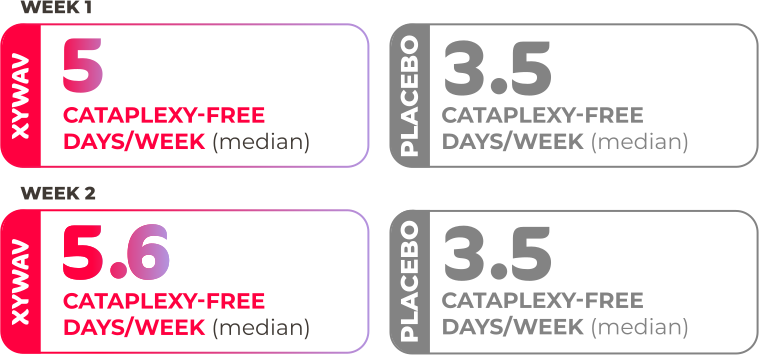
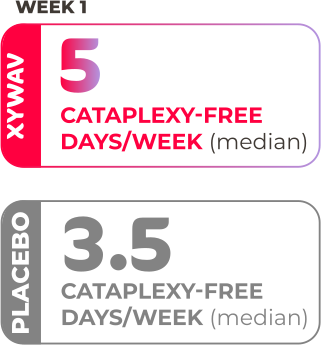
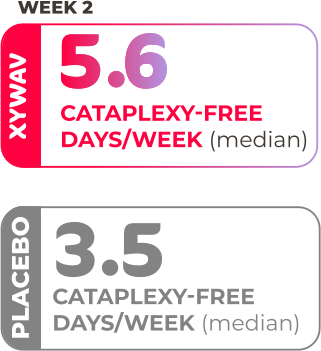
This post-hoc analysis was exploratory, which means it cannot be used to show how well XYWAV works. An additional analysis may be warranted.
*Based on the median, which is the middle number in a data set.
The phase 4 clinical study
The DUET study evaluated the effect of XYWAV on nighttime sleep and daytime symptoms in patients with narcolepsy

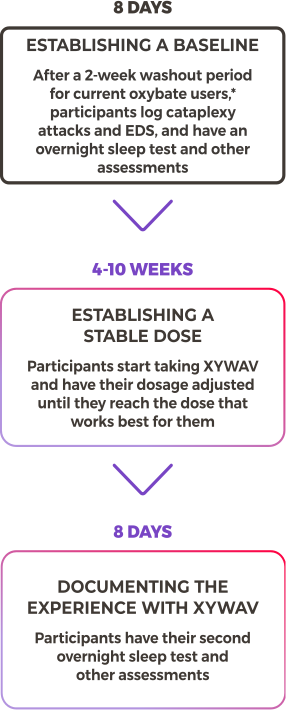
This information is from a phase 4 study, which takes place after a treatment has been FDA-approved.
All 55 participants in the study knew they were taking XYWAV (this is called an "open-label" study). There was also no placebo group for comparison. As a result, it cannot be determined whether changes were related to treatment or to other factors. This study is descriptive and should not be used to show how well XYWAV works.
*Period of time where participants stopped taking any oxybates to help establish a baseline.
Primary endpoint: change in excessive daytime sleepiness (EDS)
This information is from a phase 4 study, which takes place after a treatment has been FDA-approved.
34 participants completed the ESS at baseline and at the end of treatment. All participants knew they were taking XYWAV (this is called an "open-label" study). There was also no placebo group for comparison. As a result, it cannot be determined whether changes were related to treatment or to other factors. This study is descriptive and should not be used to show how well XYWAV works.
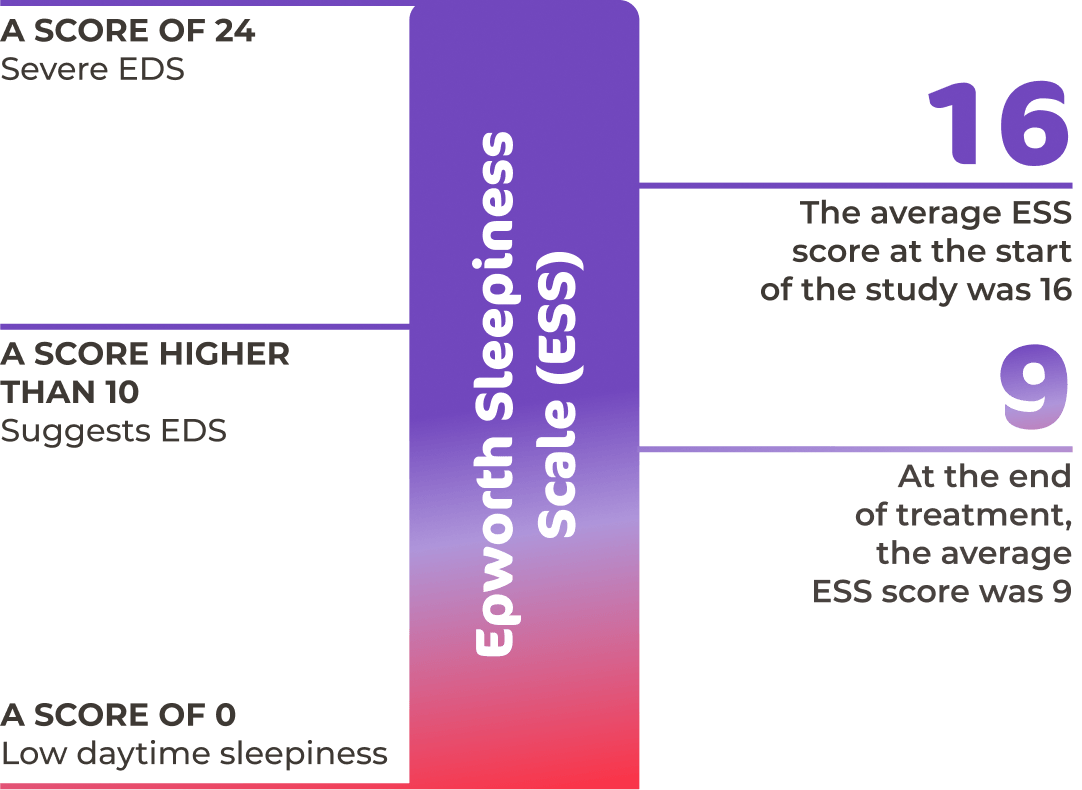
The Epworth Sleepiness Scale (ESS) measures a person's general level of daytime sleepiness. This study looked at the ESS scores when people started the study (16 points on average) and the scores once they had been on XYWAV (9 points on average) and found a change of –7.7.
95% confidence interval (CI) of -9.6 to -5.8. This means there is 95% confidence that the true population mean change lies between these numbers.
There was a standard error of 0.9. Standard error measures how much a result would likely change if you repeated the study with a different set of people.
Sleep stages are the different phases your brain and body cycle through when you sleep. Each stage—ranging from light sleep to deep sleep and REM sleep—plays a role in helping you rest and recharge.
DUET secondary endpoint: transitions between sleep to light sleep or wake

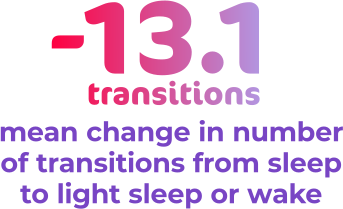
- This information is from a phase 4 study, which takes place after a treatment has been FDA-approved
- 34 participants had sleep stage transitions measured at baseline and end of treatment. All participants knew they were taking XYWAV (this is called an "open-label" study). There was also no placebo group for comparison. As a result, it cannot be determined whether changes were related to treatment or to other factors. This study is descriptive and show not be used to show how well XYWAV works
This study looked at the number of transitions between sleep to light sleep or wake when people started the study (54.6 total transitions on average) and the number of transitions once they had been on XYWAV (41.6 total transitions on average) and found a change of -13.1.
95% confidence interval (CI) of –19.0 to –7.1. This means there is 95% confidence that the true population mean change lies between these numbers.
There was a standard error of 2.9. Standard error measures how much a result would likely change if you repeated the study with a different set of people.
REM=rapid eye movement.
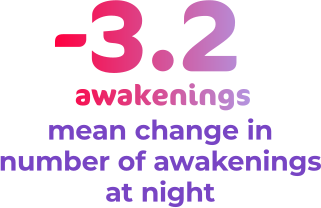
DUET secondary endpoint: change in number of nighttime awakenings

- This information is from a phase 4 study, which takes place after a treatment has been FDA-approved
- 34 participants had the number of nighttime awakenings measured at baseline and the end of treatment. All participants knew they were taking XYWAV (this is called an "open-label" study). There was also no placebo group for comparison. As a result, it cannot be determined whether changes were related to treatment or to other factors. This study is descriptive and show not be used to show how well XYWAV works
This study looked at the number of nighttime awakenings when people started the study (13.9 awakenings on average) and the number of awakenings once they had been on XYWAV (10.8 awakenings on average) and found a change of -3.2.
95% confidence interval (CI) of –5.0 to –1.3. This means there is 95% confidence that the true population mean change lies between these numbers.
There was a standard error of 0.9. Standard error measures how much a result would likely change if you repeated the study with a different set of people.